
What Is Liquidity Provisioning on AMMs and Where Does the Yield Come From?
Decentralized exchanges (DEXs) allow users to trade crypto assets without a central intermediary. Instead of matching buyers and sellers through an order book, most DEXs rely on Automated Market Makers (AMMs). AMMs are the foundation of decentralized trading — and liquidity providers (LPs) are the participants who make these markets work. This article explains what liquidity provision is, how AMMs work at a high level, and where LP yield comes from.
Published: 9 months ago
Read time: 3 min / 415 words
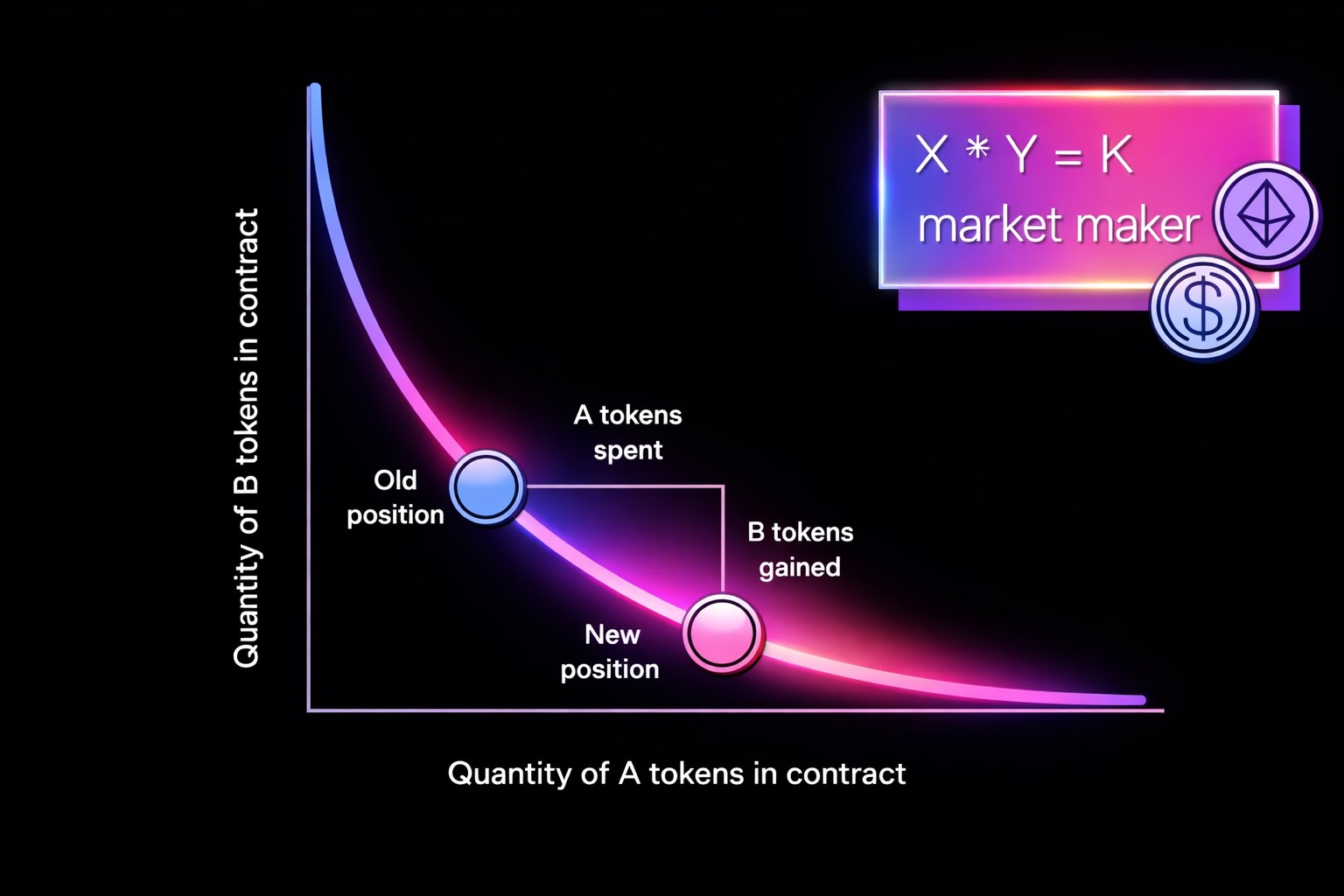
What Is Liquidity Provision (LPing)?
Liquidity provision means depositing two assets into a liquidity pool on a decentralized exchange.
For example:
An LP deposits ETH and USDC into an ETH/USDC pool
Traders swap between ETH and USDC using this pool
The LP earns a portion of the trading fees
By supplying assets, LPs enable continuous trading and are compensated for providing this service.
How Does an AMM Work?
An Automated Market Maker is a smart contract that:
Holds a pool of two assets
Sets prices automatically based on supply and demand
Executes trades directly against the pool
When a trader swaps one asset for another:
One asset is added to the pool
The other is removed
The price adjusts automatically
There is no buyer–seller matching.
Instead, the pool itself is always the counterparty.
Visual: How an AMM Facilitates a Trade
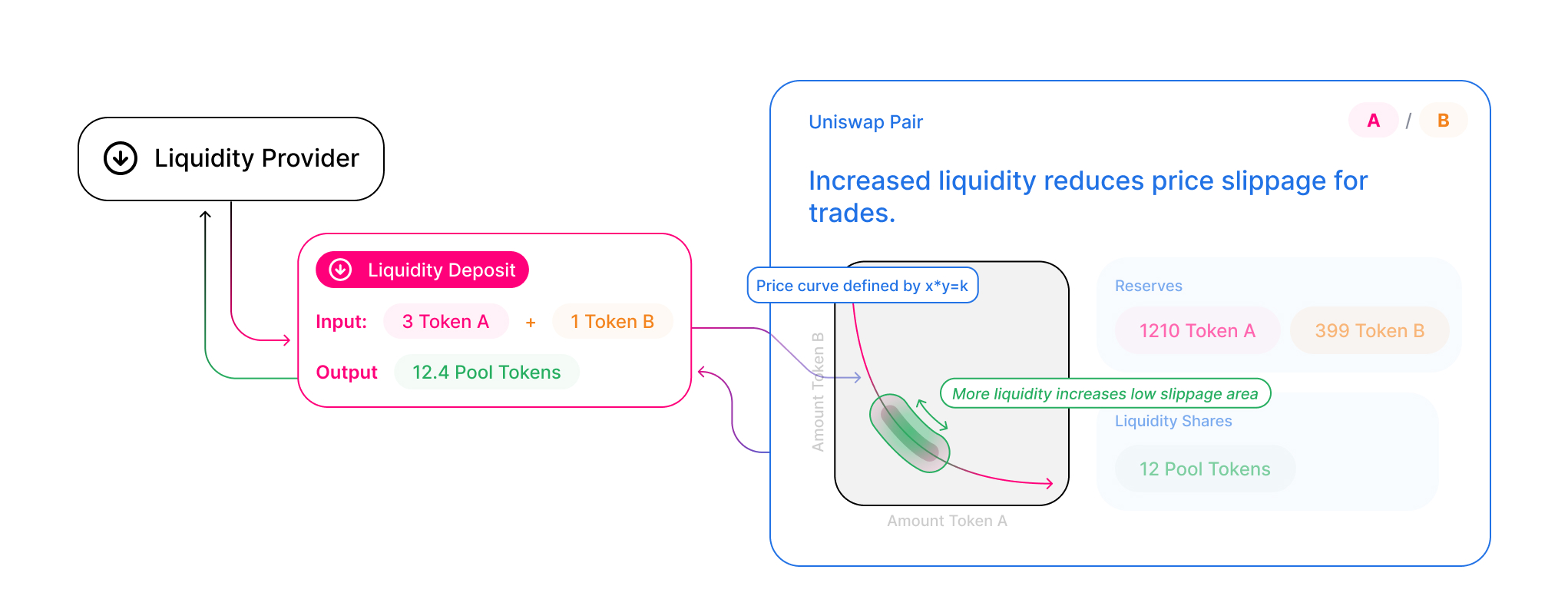
Source: How Uniswap works, 2025
How to read the diagram:
Liquidity providers deposit two assets into a pool
Traders swap one asset for the other
The AMM adjusts the price automatically
Trading fees are collected and distributed to LPs
This mechanism allows trading to happen continuously, without intermediaries.
Where Does LP Yield Come From?
LP yield primarily comes from trading fees.
1. Trading Fees
Every trade on an AMM pays a small fee.
These fees are:
Collected by the protocol
Distributed to liquidity providers
Proportional to the amount of active liquidity
More trading activity generally means higher fee income.
2. Market Activity
Liquidity provision benefits from active markets:
Frequent trading
Back-and-forth price movement
High on-chain volume
This means LP strategies can perform well even when prices move sideways.
3. Protocol Incentives (Optional)
Some AMMs offer additional rewards, such as:
Incentive tokens
Liquidity mining programs
These incentives can enhance returns but are typically temporary and should not be viewed as permanent yield.
What Are the Risks?
Liquidity provision is not risk-free.
Key risks include:
Price movements of the underlying assets
Impermanent loss, when asset prices change relative to each other
Smart contract risk
Successful LP strategies balance fee generation against these risks.
Liquidity Provision as a Yield Strategy
Liquidity provision earns yield by:
Enabling decentralized trading
Providing liquidity when it is needed
Capturing fees from real economic activity
Rather than relying on price appreciation, LPing focuses on earning yield from usage and volume.
At Yieldhaus, liquidity provision is treated as a structured yield strategy, combining market selection, active management, and disciplined risk control.
Summary
AMMs power decentralized exchanges
Liquidity providers supply assets to trading pools
LPs earn yield primarily from trading fees
Concentrated liquidity improves capital efficiency
Yield comes from market activity, not speculation
Liquidity is the engine of DeFi — and providing it is one of the most fundamental ways to generate sustainable on-chain yield.